Wake up
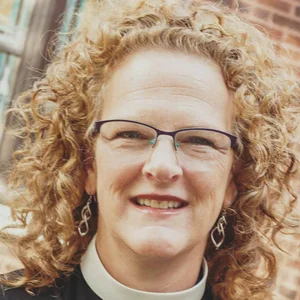
Sermon by Pr. Michelle Sevig on the Fourth Sunday in Advent + November 30, 2025.
We don’t know we are asleep until we wake up. Have you ever noticed that?
One of the favorite parts of my day is nap time, when I snuggle under the blankets, cat curled up in the nook of my folded legs, head resting comfortably on a cozy feather pillow. I usually doze off without too much trouble. I know I’m going to sleep, but I don’t know that I am asleep until I wake up.
I’ve had nights where sleep hides from me. On those sleepless nights, I cannot find a comfortable position. My brain is busy–worrying, planning, wondering. I watch the hours tick by and the only way I know I’ve slept is by waking up. I glance at the clock to calculate how many hours it’s been since I last glanced at the clock. Two? Three? Even four?
Paul tells the readers of his letter to the Romans, “you know what time it is, how it is now the moment for you to wake from sleep. I bet many of the letter’s recipients did not know that they had fallen asleep. His words imply something hard to admit: we often don’t know we’ve drifted off spiritually. We go about our lives—working, caring for our families, checking off lists—without realizing we’ve gotten sleepy.
Jesus says the same in today’s Gospel. He likens the coming of the Son of Man to the days of Noah: “Before the flood, they were eating and drinking, marrying and giving in marriage… They knew nothing until the flood came and swept them all away.”
And then comes the piercing truth: (Debi Thomas) “It’s so very hard to accept the fact that we’re not awake, that we’re missing profound spiritual realities because we’re fast asleep in the ordinary and the mundane. We want to believe that the status quo will save us. We want to believe that business-as-usual will be good enough to keep us attuned to God. We want to pretend that Christianity will never require anything hard or costly of us.”
And yet Advent breaks in with a different message: “Wake up!”
Not because God wants to frighten us, but because God knows how easily we sleepwalk through our days—how easily we miss the sacred right in front of us. The call of this season is to recognize that we have been living as though the presence of God were far away, when in truth God is near—closer than our own breath.
Today’s Gospel reading speaks of the Second Coming. Some of you may be familiar with the popular series “Left Behind.” The authors tell us to fear that day, to brace for the worst. But the early Church saw it completely differently. As one theologian writes, “for the Apostles and all of the Mothers and Fathers of the Early Church, the second coming of Christ was seen as the best thing ever to happen to the world.”
Instead of trying to escape Christ’s return, the early Christians prayed every day, “thy kingdom come, thy will be done on earth as it is in heaven.” And the ancient Aramaic prayer, Maranatha—Come, Lord Jesus!—was not whispered reluctantly, but cried out with longing. They wanted Christ to come, soon and fully, because they trusted that his coming meant healing, restoration, and joy.”
The end of time is not the terrible destruction of the world, but its restoration, its healing, its perfection. In this life, we catch glimpses of God’s goodness—a warm embrace, a conversation that makes our spirits rise, a beautiful art or music, a delicious meal. All of these are hints of the world Christ is bringing about. But we must be awake to see them.
We might think this passage is meant to inspire fear—judgment is near, so protect yourself. This passage has inspired a million sandwich-board signs: ‘The end is near.’” Some interpret it as a command to lock our houses, install cameras, fear our neighbors, and live like people prepping for doomsday.
“But if the passage is about spiritual awakening, then the actual request is the opposite of self-protection. It’s instead asking for an intense vulnerability… a willingness of the soul to be present with God.” And that vulnerability can feel frightening, because it requires us to lower our guard and let God meet us in the here and now.
We wake up when we begin to pay attention, and ready ourselves to welcome God in the unexpected. Not dramatic signs. Not cosmic warnings. But the grace of the ordinary–the kindness of a stranger. A moment of forgiveness. A warm meal shared. A sudden swell of compassion. These are Advent moments—moments that reveal God is already here.
Advent brings us the good news that Christ is coming. Not just as a baby long ago, but Christ is coming this day as we gather around God’s word and this Thanksgiving feast. Christ is coming in the poor and hungry, the sick and dying, and all who are at the margins. Christ is coming in our hopes and dreams for a more just world. Christ is coming in our yearning that there is more to life than we presently know.
Christ is coming soon—yes. But Christ is also arriving, again and again, in every moment of openness. Every moment of compassion. Every moment of wakefulness. We don’t know we are asleep until we wake up. Maybe today is our moment to open our eyes. Not to panic. Not to fear the future. But to notice the presence of the Holy One that has been with us all along. Christ is coming. Christ is already here. Keep awake.