Who do you think of?
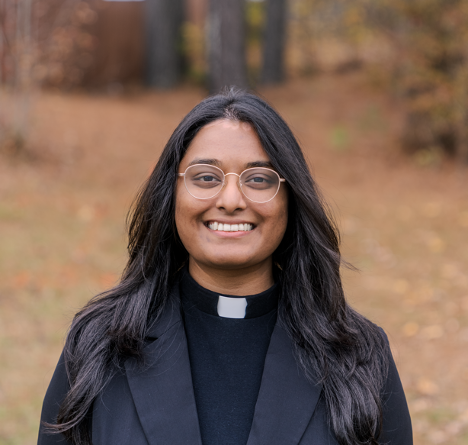
Sermon by Pr. Sharai Jacob on the Fourth Sunday after Epiphany + Saturday, January 31, 2026
In Luke, the first beatitude says, “Blessed are the Poor,” and that’s the version I’m used to hearing. So reading Matthew’s version makes me wonder, who are, “..the Poor in Spirit”?
In Jesus’ time to be labeled “poor” meant that you were unable to defend what was yours, or that you fell below the status at which you were born. They are unable to maintain their inherited honor and have fallen in disgrace and shame. This would include people who have lost social standing, people who are oppressed or persecuted, as well as people who have no power or money. Those without money are also considered poor in spirit because they are living under the crushing weight of oppression. This weight attacks more than their need for food and shelter, but also their need for dignity, justice, and belonging.
So then who do you think of today when you hear, “Blessed are the poor in spirit”?
I imagine even this first beatitude alone would encompass any person living under oppression today! And when we add the other beatitudes: those who mourn, the meek, those who hunger and thirst for righteousness… who do you think of?
How about the people who are buying gas masks and standing out in the cold trying to protect their neighbors? The people being held by ICE in torturous prison camps? Surely they hunger and thirst for righteousness, for justice, for things to be set right.
And the people who have been forced into hiding - living each day in fear? People who are watching their neighborhoods be terrorized, people who are frozen by fear of what might come next, aren’t they the meek, the poor in spirit?
And aren’t we all mourning,for the people we’ve lost? For the sense of normalcy we once had? For the sense of safety and stability we may have felt? Are we also the poor in spirit?
So if we are poor in spirit, crushed under oppression, beaten down and wrongfully imprisoned, then what good does calling us “blessed” do? The phrase “Blessed are…” is honorific language. You might also translate it as “Honorable are the poor in spirit”
Jesus is proclaiming that those who were not honored by the powers that be on Earth, are honored by God in God’s kindom. And Jesus goes on to promise that these honorable people will also receive comfort, the kingdom of heaven, and will inherit the Earth. So Jesus is opening his sermon by stating that as long as there is inequality, God stands firmly on the side of the oppressed.
These “blessings” won’t take away our fear or end the violence around us. They don’t provide us with a better system of justice or means to free the wrongfully imprisoned. But they do remind us where we can look for hope.
Being poor in spirit, being meek, mourning these are all things made less devastating when we weather them as a community. Ours is the kindom of heaven, the family of God. We can lift each other up by simply being present together. We can experience God’s guidance by simply being open to it.
And as far as actually changing the world around us, well the rest of the beatitudes and indeed most of scripture addresses that. We are all called to act against injustice, to love our neighbors as ourselves. The last beatitudes honor the merciful, the pure in heart, and the peacemakers.
The context Jesus was speaking in would understand “the merciful” as the kind of person who would forgive debts. The “pure in heart” are those who check their values against God’s will for the world. Instead of covering up or ignoring violence and calling it peace, the peacemakers Jesus is honoring here are those who do the difficult and often dangerous work of creating peace.
This list shows us a glimpse of what we can strive to be as the kindom of God: The peacemakers are the people who do the work of defending the innocent, of calling for justice, of diffusing tension and working through conflict. The pure in heart paint a picture of God’s will for the world, pointing us towards hope and justice. The merciful offer comfort to those who mourn and to those who feel that they are not enough.
The last verses in our reading say, “11 Blessed are you when people revile you and persecute you and utter all kinds of evil against you falsely on my account. 12 Rejoice and be glad, for your reward is great in heaven, for in the same way they persecuted the prophets who were before you.” Jesus is not telling us that we should be happy that we are being oppressed or that we should simply accept persecution and mistreatment.
Jesus is pointing out to us that our ancestors in the faith. The saints, the great cloud of witnesses, are standing with us too. When we are persecuted, and reviled, when they tell lies about us, when they use AI to doctor video evidence, when they talk about peaceful, unarmed protesters as though they were the violent ones, they are repeating the tactics used throughout history. It’s not new, there are many who have been through this before and we can look to them, to their legacies, to their writings and speeches for guidance.
Our gospel reading today comes to us at a time when we are hungry to see things put right. We may be feeling overwhelmed, tired, or lost and searching for hope. Maybe you’re in need of comfort, or understanding, or solidarity - just for someone to say “I agree, I see what you see.” When we are overwhelmed and hopeless we might still be able to offer solidarity. When we can’t make it to a protest, we might still be able to offer hope and comfort.
So, while we witness injustice around us and as we mourn, may we hold each other up may, we join the fight for justice, may we work to become God’s kindom for one another. Amen.