A Visceral Reaction
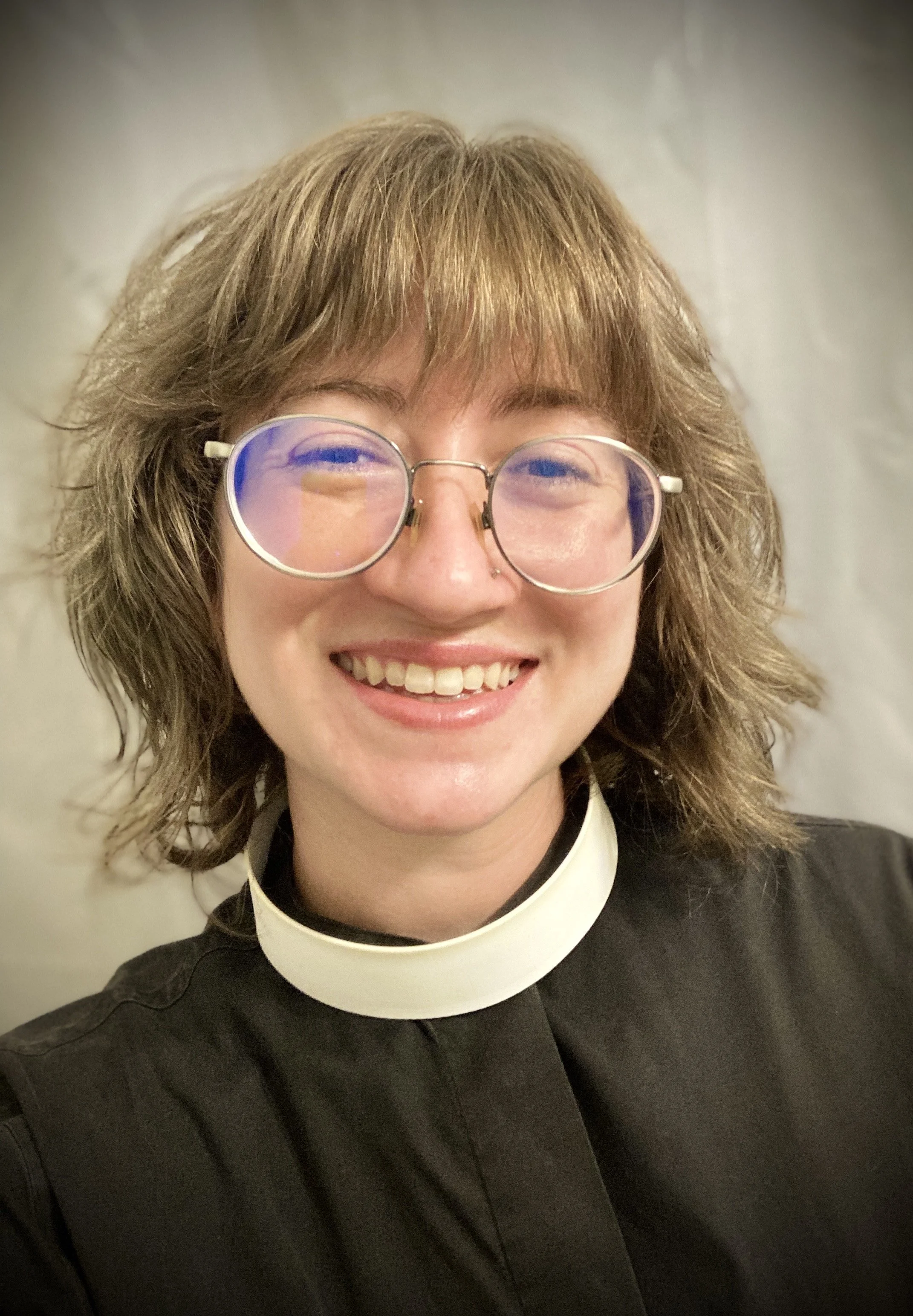
Sermon by Seminarian Alex Clare on the Second Sunday of Easter + Sunday, April 12, 2026
Have you ever had a visceral reaction?
In Jesus’ time, people didn’t say “I’m heartbroken.” They said, “My liver is on fire.” Back then, Greeks and others didn’t say that emotions came from the heart, or the head. They said emotions came from their intestines. They had “gut feelings.” They said that they felt anger and sorrow in their viscera — they had “visceral reactions.”
When Thomas hears from the other disciples that Jesus has been resurrected, he has a visceral reaction. He scoffs and rolls his eyes. “Yeah, right. I’ll believe that when I put my fingers in the nail-holes in my teacher’s hands, and my hand in his wounded side. Have you forgotten what Rome did to our friend? There’s no coming back from that.” But then Jesus appears, bodily— flesh and blood and bone— in the room where the disciples are hiding from the Roman authorities. The door is locked, but Jesus still makes his presence known.
Psychiatrist Bessel Van Der Kolk tells us that when we experience trauma, “the body keeps the score.”
And Jesus’ body certainly keeps the score.
Crucified by Rome, the resurrected Christ shuffles on limping feet and holds the wound in his side. With broken hands, he raises his arms and says, “Peace be with you.”
Thomas’ mind flashes back to another time Jesus’ arms were outstretched, and the similarities cannot be denied.
Trauma makes things feel unreal, and so Thomas has to know— he has to verify— he has to touch— Jesus to know that he is real. He does not believe what sight and sound tell him; he is not an auditory or visual learner. The terrifying force of Roman occupation has caused doubt to enter Thomas’ mind; the world feels dis-ordered. So he needs to reach out and grasp Jesus to know what is true. We might say that Thomas is a “tactile learner.”
And Jesus knows this about Thomas.
Jesus knows that Thomas is a man who works with his hands, a fisherman— perhaps a builder.
So Jesus “comes out” to Thomas.
Jesus says, “This is who I am; believe me.”
And in that vulnerable moment, Jesus invites Thomas to feel his wounds and know that he is the Messiah. That he is the risen Christ, wounded but still whole. Injured but still victorious. Disabled but still God.
Nancy Eiesland, the founder of Disability Theology and author of the textbook, “The Disabled God,” writes about the importance of Jesus’ body still being injured — wounded— dis-abled—after the resurrection. As a Christian who used a wheelchair, it was important for Eiesland to see her story reflected in Jesus’s story, because if Jesus came for all of us, then he came for all of us— and that means He experienced pain, injury, illness, disability, and death.
During my Clinical Pastoral Education, I worked mainly on the Colorectal Unit of a hospital. Patients on this floor were usually there for surgery, to have ileostomies and colostomies constructed. Diseased parts of their intestines were cut away, and the remaining part of their digestive tract was redirected through a tunnel going out of their abdomen and into a medical pouch that they would wear under their clothing for the rest of their life.
Patients on my floor were often in pain.
For the first two days after surgery, I was usually turned away, told, “Come back later.” But on the third day, the patients would rise— awake and wanting to talk with someone about their new embodiment.
They felt pain, and grief, and embarrassment. They didn’t know anyone else who was ill, injured, Disabled like them.
They didn’t know anyone else who had a painful wound in their side.
So we talked about this Gospel—doubting, verifying, touchy-feely Thomas… and the resurrected Jesus with his wound in his side. We talked about the incision of the centurion’s spear, the doctor’s scalpel. We talked about the blood and water that left Jesus’ wound; the discharge that left the patient’s ostomy.
We talked about pain.
And we talked about the body and blood of Jesus— Communion, and how the patient might still join the Eucharistic banquet— now that they had health restrictions on what food and drink they could ingest.
When you can’t eat, how do you come to know God?
You touch.
You hold hands, because even though the doctors’ and nurses’ touch heals, their good and holy work still hurts.
So, people who can’t eat but want to know God reach out to touch, to find a non-painful and comforting presence.
It is a vulnerable moment. A visceral moment. Jesus invites Thomas to feel his wounds, to believe his new embodiment in all the grief, pain, challenge, and joy it entails.
Investigative, Thomas puts his fingers through the nail-holes in Jesus’ hands, holding his breath, not daring to believe the good news.
Tenderly, Thomas puts his hand in Jesus’ side.
And if we remember what our ancestors in the faith said about their viscera, we can understand that Jesus is saying something like, “Feel my heartbeat. Feel my emotions. Feel my anger and sorrow and hope that burns within my liver, and know that I am God. Believe me.”
Jesus is inviting Thomas into that “gut feeling” about the resurrection, that “visceral reaction” to realizing his friend, his teacher, his travelling companion is the Messiah. Through touch, Jesus invites Thomas’ doubts to transform to hope.
Today, Brooklyn will be invited into that transforming hope, as we baptize her with water, poured over her body as a visceral sign of Christ’s death and resurrection. At the Eucharistic banquet, we will eat and drink, nourishing our one body in Christ, at a table of tactile welcome. And when we are sent out into the world to share the good news, may we speak from our scars, as Jesus did.
May we embrace the other with our open, broken hands.
May our livers burn with passion.
May we have a “visceral reaction.”
Amen.