Eye-Opening
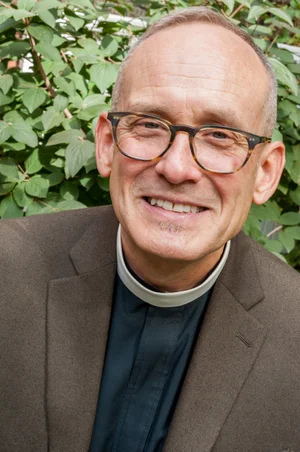
Sermon by Pr. Craig Mueller on the Third Sunday of Easter + Sunday, April 19, 2026
It takes a while. It takes a while for the two disciples to recognize the risen Christ. It takes a seven mile walk to Emmaus. With visceral emotions and stimulating conversation. Recognition isn’t instant.
I was at a conference this week and saw dozens of colleagues, some that I see often and some not so often. A few times when someone said, “hi Craig,” I had to quickly determine if I recognized them. Sometimes I needed to glance discretely at their nametag. After all, there were folks I hadn’t seen in many years. On one occasion, we were outside and the man was wearing a coat. I needed him to reveal his nametag but then I was quite embarrassed because he is someone I’ve known well over the years.
To be fair, aging and glasses and hair (or lack of it), among other things can change our appearance. I predict that in the future there will some kind of facial recognition software that will whisper a name in our ears when our memory falters.
Onward to today’s gospel. A provocative remark about stories has been attributed to Dostyevsky, Tolstoy and others. There are only two plots in all of literature. A person goes on a journey. A stranger comes to town. And both are in today’s gospel.
We wonder why Cleopas and the other disciple don’t recognize the stranger who joins them on their seven mile walk out of Jerusalem to Emmaus. What keeps their eyes from recognizing him? Some suggest that the risen Christ looks different than the historical Jesus. The Greek word for recognize gives us a clue. To recognize means to receive; to really know; to have secure knowledge. Knowing the truth of a message is different than knowing a person. One scholar wonders, in Luke’s telling, whether the disciples really knew Jesus in the first place. Particularly the Jesus who predicts his passion and resurrection.
Recognition comes slowly for the two disciples. It takes time for their eyes to open and their hearts to soften. For one thing, the Greek word for stranger suggests a migrant, a resident foreigner, someone from another place. How does the risen Christ appear in such strangers?
And Jesus seems to take his sweet time to reveal himself. Jesus doesn’t test or scold or cut off the disciples. They are heartbroken over the loss of their friend. And the stranger on the road simply listens to their story.
We all have our roads to Emmaus. The place you go to escape. The road you walk when hope is gone. The path you take when you lose a job, a friend, a spouse, a child, a purpose, a dream. The long journey back to the empty house, to life as usual.
The disciples are filled with such deep emotion. They explain to the stranger what happened days before. How their beloved companion and teacher had been condemned to death and crucified. And then these haunting three words: but we had hoped. We had hoped that he would redeem Israel.
We had hoped. We had hoped things would have turned out differently. We had hoped for better news. We had hoped you would stay longer. We had hoped the depression would let up. We had hoped the new leader would bring a change in direction. We had hoped the violence would have stopped. We had hoped things would have changed by now.
When our hopes are dashed, we may not even recognize our life anymore. We may not recognize the country or world in which we are living. Maybe you don’t recognize your Christian faith as it is played out on the world stage. Many are grateful for Pope Leo’s prophetic words: “Woe to those who manipulate religion and the very name of God for their own military, economic and political gain, dragging that which is sacred into darkness and filth. Blessed are the peacemakers. The world is being ravaged by a handful of tyrants, yet it is held together by a multitude of supportive brothers and sisters.”
Due to technology and other factors, life is moving and changing so quickly we can barely catch up with it. A slow walk to Emmaus would do us all good.
And then. And then the disciple’s hearts burn within them as the risen Christ opens the scriptures to them. The mystery of death and resurrection dawns on them. And then their eyes are opened when Jesus does the most Jesus-thing he could do. He breaks bread. Cultural boundaries fall. The stranger who is always sharing meals with outcasts becomes the host. And their eyes are opened.
Thornton Wilder's play “Our Town” ends with an eye-opening final scene many of you know. Emily Gibbs—a woman who had died in her mid-twenties while giving birth to a child—is allowed to leave her grave and return to life for a single day. The others in the graveyard tell her the return will be too painful. Yet Emily decides to go anyway and chooses her twelfth birthday.
Fourteen years have gone by since her death. Emily pleads with Mama to recognize her, just for a moment, as if she really sees her. Mama, however, is too busy.
All throughout the day people are too busy to recognize or to touch her. Before long Emily cries out that she can’t go on, that it is too painful. But before she goes back, she takes one more look at her life and says this:
One more look. Good-bye, Good-bye, world. Good-bye, Grover’s Corners. Mama and Papa. Good-bye to clocks ticking. And Mama’s sunflowers. And food and coffee. And new-ironed dresses and hot baths. And sleeping and waking up . . . Oh, earth, you’re too wonderful for anybody to realize you.
A moment later, the Stage Manager suggests that perhaps saints and poets recognize the deep beauty of life.
What a gift that we gather today with saints and poets, mystics and musicians, hymnwriters and artists, who mentor us day by day in living with open eyes, burning hearts, and receptive bodies.
As poet Mary Oliver puts it: “Oh, to love what is lovely and will not last! What a task to ask | of anything, or anyone, | yet it is ours, and not by the century or the year, but by the hours.”
Stay with us, divine stranger, risen Christ. Open our eyes. Open our eyes to the wonder of life. Open our eyes to grace all around us. Open our eyes to recognize you in the breaking of the bread. To recognize you in strangers. And to you recognize you when our hearts are breaking with sorrow. And burning with joy.