The harvest is plentiful
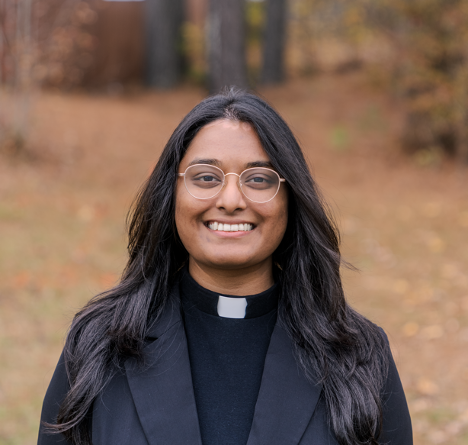
Sermon by Pr. Sharai Jacob on the Third Sunday after Pentecost + Sunday, June 14, 2026
"The harvest is plentiful, but the laborers are few." It’s easy to hear those words as a challenge. The church needs volunteers. The world needs people to step up. We need more people to work harder to fix the world’s brokenness.
But before Jesus even mentions laborers, he does something else: he sees.
Matthew tells us, "When he saw the crowds, he had compassion for them, because they were harassed and helpless, like sheep without a shepherd." Everything begins there. Not with a task or a program, but with compassion. Jesus looks at people who are overwhelmed, exhausted, and burdened, and his heart is moved.
Jesus first asks us to see: who are the harassed and helpless in our city today?
Neighbors struggling to afford housing.
Friends weighed down with anxiety about what the future holds.
Elders and young people feeling isolated from community.
Families stretched thin by rising costs and constant uncertainty.
Refugees and immigrants living with the fear of being taken and never seeing their family or their community again
Many of us see these people and the problems they face and we feel a need to fix things. But the first step of discipleship is to know people the way that Jesus did.
Jesus connected with people and showed them through relationship, through community, that they were loved by God. The disciples and the people who walked with Jesus received healing, dignity, belonging, and hope. The kingdom of God comes near wherever those gifts are shared. That is why the harvest is plentiful. Because there is no shortage of people who need to know they are loved by God and valued by their neighbors.
But, "The laborers are few." We hear that phrase so often that we can miss the image Jesus is using.
When Jesus speaks about laborers, he is talking about field workers. In his world, these were often among the most vulnerable workers in society. They would stand together waiting for farmers or landowners to come and offer them work each day. They were often only paid enough to feed their families for one day - if the landowners didn’t have work for them, the laborers didn’t eat. These laborers worked to provide food for everyone, but could not often afford more than one day’s worth of food.
When Jesus needed an image for the people who would carry God's good news into the world, he did not choose kings or governors. He did not choose religious experts. He chose laborers.
This image of ancient laborers is reflected in the lives of people who harvest crops in our country today. People who are often overlooked, whose work is often devalued. People who are attacked and villainized for their immigration status even as we all profit from their labor.
Most of us are far removed from the fields where our food is grown. Yet every meal we eat depends on people whose work is largely invisible to us—farmers, harvest workers, truck drivers, warehouse workers, grocery employees, and countless others.
Jesus' choice of laborers reminds us that God's work in the world is often carried out by the people you would least expect. When Jesus sends the disciples, he does not send superheroes. He sends ordinary people, people who are also in need. Fishermen, shepherds, carpenters…
One of them is Matthew, the tax collector. Matthew had a level of security and status while working for Rome. All of his needs were met, yet he follows Jesus away from that life and into a community where people depend on one another. That is part of what discipleship means. I’m not saying that we should all quit our jobs and start a commune, but there is a call here to recognize the trap of self-sufficency.
We live in a culture that celebrates self-sufficiency. We are taught that success means not needing anyone else. But Jesus calls the church to work in a different way. The church is a community of mutual dependence. We need one another. We need people who can make meals, offer rides, and sit beside those who are grieving. We need finance people, tech people, and hospitality people. We need people who can offer wisdom or new ideas. We need other communities and organizations to help us do the good work we are called to.
Jesus never asks us to do this work alone. Instead, he gathers ordinary people into a community and sends them out together. This is where our Lutheran understanding of vocation speaks so beautifully.
Many people hear the word "mission" and think about church programs. But God works through our ordinary, everyday callings too. The teacher helping a student discover their gifts. The nurse caring for a frightened patient. The retiree checking on a lonely neighbor. The parent caring for a child. The worker who treats others with dignity and kindness. The volunteer serving a meal.
The kingdom comes near through ordinary acts of love. Which means many of us have already been laboring in God's harvest this week. Maybe you didn't call it ministry. Maybe it didn't feel important. But every time you shared compassion, every time you carried someone else's burden, every time you reminded another person that they matter, Christ was working through you. That is the harvest. That is the mission.
The good news of this gospel is not that there is more work for us to do, although there is always more work to be done!
The good news is that Jesus sees a hurting world and invites ordinary people to join him in healing it.
The harvest is plentiful because there are people everywhere who need compassion, dignity, justice, and hope. Every time a burden is shared, every time a stranger is welcomed, or a wound is tended. Every time someone is reminded that they are not forgotten, the kingdom of heaven comes near.
We all are sent together to join in Christ’s work: field workers, teachers, artists, nurses, social workers, lawyers, organizers, neighbors and friends.
God’s Grace is freely given to all, and we are all invited to the harvest.
Amen.