Risks of love
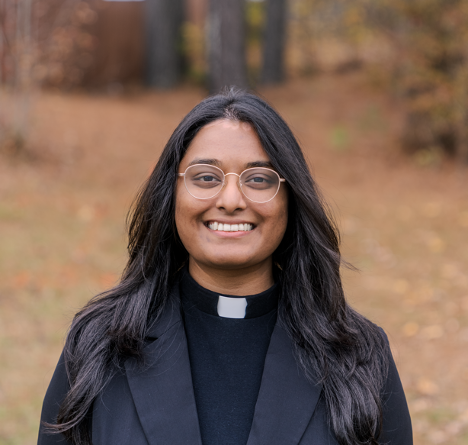
Sermon by Pr. Sharai Jacob on the Fourteenth Sunday after Pentecost + Saturday, August 30, 2026
Poor Peter! He was doing so well in last week’s sermon. When Jesus asked the disciples, “Who do you say that I am?,” Peter answered, “You are the Messiah, the Son of the living God.” And Jesus called him the rock on which the church would be built. He was given the keys to the kingdom of heaven. Peter was the one who understood who Jesus is, and had the courage to speak up about it!
And then, just a few verses later, Peter gets it spectacularly wrong. Jesus begins to tell the disciples what is going to happen. He will go to Jerusalem, he will be captured, tortured, and killed by the government. Peter speaks up again! But this time he responds the way most people would to a friend predicting their own immanent torture and death. Peter says, “No. Absolutely not. That cannot happen to you.” And Jesus responds with some of the harshest words we ever hear him speak to one of his disciples: “Get behind me, Satan.”
It’s almost like whiplash! Last week, Peter is the rock. This week, Peter is a stumbling block. But maybe that is precisely why Peter is such a compelling disciple. Peter is not an example of what happens when a good person becomes a bad person. Peter is an example of what it means to be human.
In fact, Peter's mistake comes from a place that is remarkably understandable. Peter doesn't want Jesus to suffer. He loves Jesus. He has followed him this far. He has seen the healings, heard the teaching, watched people discover hope where they had none before.
And Peter has an idea about what the Messiah is supposed to do. The Messiah is supposed to win. The Messiah is supposed to defeat the powers that oppress God's people. Surely the Messiah shouldn't be killed by the very powers he has come to challenge. Peter imagines Jesus becoming powerful enough to overcome the powers of the world. But Jesus is not simply planning to replace one form of domination with another. Jesus came to end the cycle of power, not to join it.
Peter wants Jesus to take the easier way—or at least the safer way. But that is not Jesus’ way. Jesus turns to the disciples and says that if they want to follow him, they must take up their cross. We need to be careful with those words, “Take up your cross..” They have been used to tell people that suffering is inherently good. They have been used to tell people to endure abuse and neglect. That is not what Jesus is saying.
Jesus isn't telling us to go looking for suffering or to simply accept suffering. The question is not, “How much pain can I endure?” The question is more like, “What happens when choosing love costs me my comfort? What happens when following Jesus means giving up my need to be right, safe, or in control?”
Sometimes loving our neighbor means allowing someone else's suffering to interrupt our own lives. That’s much harder than simply believing the right things, or having the right answers, like Peter did last week.
There is always an easier way. There is always a way to stay comfortable. There is always a way to keep our faith safely at a distance. We can worship, pray, believe—and still remain spectators. And there is something very tempting about being a spectator. If we stay on the sidelines, we don't have to risk very much. We don't have to be changed.
But Jesus suggests that this kind of self-protection comes at a cost. Jesus asks, “What will it profit them if they gain the whole world but forfeit their life?” He's asking us if the life we're building and protecting is really worth it. What if we protect ourselves so thoroughly that we never become vulnerable enough to love? We protect ourselves from pain—but we may also protect ourselves from joy. While the easy way can keep us safe, it can also keep us alone.
The risks of love draw us into relationship. The person who risks their safety standing for justice, that person may find a deeper sense of community in the struggle. The person who allows themself to be vulnerable, to accept correction and try to change, they discover what it truly means to be known and to belong. We don't take up our cross because suffering is good; we take it up because love is good. And often love is tied to heartache, worry, or grief.
This brings us back to Peter. Because Peter is still Peter. He is the rock. He is the stumbling block. He can recognize God's truth and resist God's way in the very next breath. And if we're honest, that sounds a lot like us. We can have moments of extraordinary faith and moments when we completely miss what God is doing. We can speak words of compassion and then say something hurtful. Sometimes we imagine that discipleship means becoming the kind of person who always gets it right, but Peter reminds us that discipleship is much messier than that. Just like Peter, we are all both Saint and Sinner.
And Grace comes in when Jesus responds to Peter’s misstep. Jesus didn’t throw Peter out of their community. Jesus responds to Peter by correcting him. We know that Peter will fail again. He denies Jesus out of fear. But even after Jesus’ correction, even after Peter realizes that he messed up, he gets up and continues to follow Jesus.
We are saints and sinners. We fail to follow the way of love, and then we get up and try again. And Jesus keeps calling us. We only have to be willing to take the next step. Peter's hope didn’t rely on his own perfection. Peter's hope was based on the eternal love that Jesus showed him. Jesus is offering that love and Grace to us, too.
So the question we are left with is, “What kind of life might I discover if I am willing to give myself away in love?” On the road to answering that question, there is a cross. There is risk. There is vulnerability. But there is also community, belonging, and joy. There is a life larger than the one we can protect for ourselves. A beautiful, messy, new life of Grace, freely given.