What takes your breath away
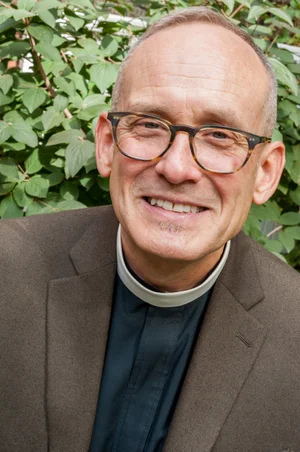
Sermon by Pr. Craig Mueller on the Fifth Sunday in Lent + Sunday, March 22, 2026
A baby’s first cry isn’t sadness, but life. After nine months in the womb’s warm fluid, air rushes into the baby’s lungs as it is born. Crying helps oxygen circulate through the body. Breath. Birth. A holy moment.
At the other end of the life cycle, when someone is near death their breathing becomes irregular. The time between breaths can be seconds or even minutes. Those gathered watch and wait. Then a slow breath in. And no breath out. Death. A holy moment. And then, tears.
Breath. Crucial to childbirth. Singing and playing a wind instrument. Meditation and yoga. And to so much more.
These last four Sundays we have had heard stories from John with rich images for baptism. Each involving an encounter with Jesus. Nicodemus and new birth by water and spirit. The woman from Samaria and living water that satisfies our deepest thirst. The man born blind and learning to see spiritually. And today, death and life in the story of Mary, Martha and Lazarus, friends deeply loved by Jesus.
It’s a story of grief and loss. It is a story of faith and hope. It is a story in John that leads the religious authorities to finally decide Jesus is a threat and must be killed. It’s a story that prepares us for Holy Week.
The death of a loved one takes our breath away. Leaver us in a state of shock and disorientation. Yet, many kinds of loss plunge us into grief. Nothing is the same. We wonder if we can go on. There are no words. Psalm 130 becomes our prayer. “Out of the depths I cry to you, O Lord. Listen to my prayer.” I’m barely hanging on.
When one of our loved ones dies and we are out of town, we try to get there as soon as possible. Why would Jesus stay away for two days? In that day, after two days the person was considered really dead, their soul having left their body. When Jesus finally arrives, Mary and Martha express their heartfelt grief by exclaiming to Jesus: if you had been here, my brother would not have died. Their grief so palpable, they can barely catch their breath.
A very human Jesus weeps out of compassion and loss. He is also disturbed in spirit, perhaps at the reality of death, or because of our all too common lack of faith. Jesus proclaims that he is not only the resurrection at the last day, or at the end of our life. He is also life itself.
Life. The breath of God that animates not only our lungs but our very being. The spirit of God that calls us forth from the dry valleys in our lives and in our world today. Especially the graves of the thousands lost in Gaza, and now Iran. The abundant life that gives us courage, resilience and hope, even in life’s most godforsaken places and times.
The breath of the spirit is so central to today’s readings. To our ears, though, Paul sets the spirit in opposition to the flesh. And the word “flesh” suggests that the body, and particularly sex, is the problem.
Of course, the Word became flesh, a beautiful breathing being. Richard Rohr suggests that when we hear the word “flesh” from Paul, in our day we could think ego. In other words, the trapped self, the false self.
When we are in a valley of dry bones. When we face loss in our personal lives. Loss in our country and world. Loss and change at Holy Trinity. We too, ask, can these bones live? Then there is a rattling of bones. The spirit breathes upon those slain. New life emerges. Originally this vision proclaimed hope to the people of God in exile. Resurrection meant returning to their homeland.
The writer Miriam Greenspan was born in a German refugee camp to two Jewish survivors of the holocaust. She learned from her parents that even in the aftermath of genocide, it is possible to live a life of kindness, generosity, and love.
Miriam writes that when someone we love dies, a part of us dies as well. She recalls the moment her infant son Aaron gasped his last breath on the ICU. As she held his body in death, he was set free from the prison of plastic tubes and electronic monitors that attached him to his life. She recalls that when he was dead, he was nakedly hers and gone in the same moment. Time stood still. The world fell silent. The self she knew was irreversibly shattered.
Breathing sanitized hospital air, Miriam said an incomprehensible prayer, simply of a flow of syllables and emotion. Then they took Aaron’s body away. Medical staff expressed condolences. She and her husband retrieved a few things from Aaron’s hospital crib: a stuffed koala bear, the gift of a friend; a red parrot that they’d held before Aaron’s eyes because they were told newborns see red more readily than other colors; and the white cotton cap that kept Aaron warm in his hospital home.
When Miriam and her husband arrived home, a storm of grief hit. Their arms were empty. The house was empty. Aaron’s room that he would never see, empty. All the life force within Miriam ached to go be with Aaron, wherever he was. In that moment, she knew how someone can die of a broken heart.
Then, suddenly, a voice that was not that of her everyday self said, “No! It’s Aaron who is dead, not you. You have breath in you. You’re alive.” She writes that she was called back to life by the wisdom of grief.
Take a deep breath. With every breath, you are alive. Jesus, the resurrection and the life, calls you out of your wintry tombs. Invites you to again marvel at the miracle of spring. Death is not the last word. Loss is not the last word. Grief is not the last word. You are alive. The sun on your skin after a long winter takes your breath away!
In the womb of the font you are born. In the tomb of the font you die and rise with Christ. Baptism is spirit. Baptism is death and life. Baptism is for life. For every breath you take.
The Spirit unbinds you. Sets you free from despair. And fills your lungs with breath after breath. Breath to calm you when afraid. Breath to support your singing. Breath to call you to ventures of which you cannot see the ending. Breath to provide you everything you need to live. Amen.
SOURCES
Miriam Greenspan, Healing through the dark emotions.
Sandra Schneiders, Written that you may believe: encountering Jesus in the fourth gospel.
Richard Rohr, “Flesh and spirit,” reflection April 10, 2015.