Living water flows
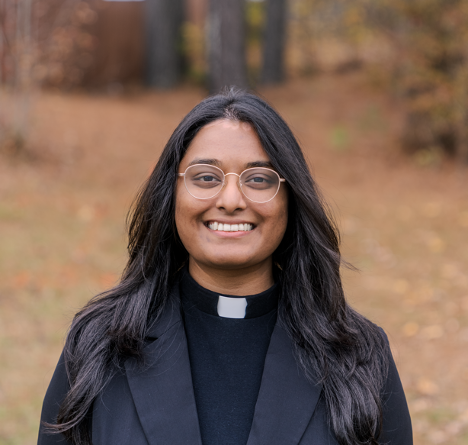
Sermon by Pr. Sharai Jacob on the Third Sunday in Lent + Saturday, March 7, 2026
This is the longest recorded conversation Jesus has with anyone in the Gospels.
Not with Peter. Not with Pilate. But with a Samaritan woman. Already, we should sense that something world-altering is happening.
For centuries, Jews and Samaritans were bitter enemies. Generations of suspicion and violent theological dispute led to discrimination against Samaritans. By the first century, Jews did not share meals with Samaritans. They did not share worship. And they certainly did not share water vessels.
Jesus is here at the well, Tired. Hungry. Thirsty.
And he begins this encounter not with a sermon — but with a request, “Give me a drink.” Jesus is aware of his need for water, and simply asks for what he needs. There is something profoundly holy about that. He does not posture. He does not pretend self-sufficiency. He just asks for water.
In our world today we are witnessing horrors daily — watching wars, genocides, and political turmoil unfold. We do not have to pretend we are not tired. We do not have to pretend we are not afraid or worried or depressed. We do have to give ourselves the permission to assess what our needs are, and ask for support, just like Jesus did.
The woman at the well is shocked, “How is it that you, a Jew, ask for a drink from me, a woman of Samaria?”
Again, this is more than just a theological disagreement.
When she expresses shock that a Jewish man would drink from her bucket, it echoes the evils of segregation - of “whites-only” water fountains. Her answer tells us about her lived experience. She is used to hearing:
You are unclean.
You are other.
You are less.
But Jesus addresses her as an equal. He does not erase her identity. He does not demand assimilation. He simply asks for water — and stays for conversation.
First-century listeners would have recognized this scene: two people at a well at noon. In Genesis, wells are where relationships begin. Isaac’s wife Rebekah is found at a well.
Jacob meets Rachel at a well in Genesis 29. A meeting at a well signals marriage or a covenant.
When Jesus talks about her marital history, it sounds scandalous in our modern context. I grew up hearing pastors assume that this woman was adulterous or had gotten too many divorces? They would shame her, and even decide that Jesus was shaming her. But the text does not shame her.
In her world, women rarely had power in divorce proceedings. It’s more likely that she was actually widowed multiple times. The Gospel never calls her sinful, and Jesus is not trying to shame her either.
Instead, some suggest the “five husbands” symbolize Samaritan history — five ancestral groups. In that reading, Jesus is not exposing her sins. He is rehearsing her people’s story. He is not some stranger. He knows her story, he knows her people, and he has come to set the oppressed free.
The covenant at this well is about God’s desire to be joined to Their people. Jesus is naming the Samaritans as beloved children of God.
This woman who has so often been degraded in modern sermons, recognizes that Jesus must be a prophet of some kind, and she begins to quiz him. She knows her theology and the ways the struggles of her people weave through it. She says, “my people worship on the mountain, but your people say the only valid place of worship is in Jerusalem.”
Jesus answers her, “the hour is coming when you will worship neither on this mountain nor in Jerusalem.” Jesus expresses that the time has come when those who worship God will worship in Spirit and in truth. Again, Jesus is validating her faith. Her people are God’s beloved children.
He also says, “You worship what you do not know; we worship what we know, for salvation is from the Jews.” I like to read her response this way, “Well I know that the Messiah is coming.”
And Jesus replies:
“I am — the one speaking to you.”
This is the first explicit “I am” declaration in John. And it is the only time in this Gospel that Jesus plainly tells someone, “I am the Messiah.” And who does he share this with? Not one of his disciples. No one with power or money or significant status. He shares this with a Samaritan woman. This is not accidental. In John, the Gospel’s central truth — that Jesus is the Messiah — is first entrusted to a doubly oppressed woman living under segregation.
And she seems to understand immediately. She leaves her water jar behind. She has received living water, the Grace of God freely given.
So, she runs back to her village to share her story. And here is something remarkable: They believe her. Her community clearly sees her as trustworthy. Perhaps even as a spiritual authority. They take her word seriously enough to go see Jesus for themselves. She becomes the first evangelist in John’s Gospel. The one denied water becomes the bearer of living water.
When the disciples return, Jesus tells them:
“One sows and another reaps… I sent you to reap that for which you did not labor.”
This is where the text meets us. We live in a time when the news keeps us awake at night. We see violence. We see rising facism. We see grotesque wealth and depravity. New and old wars and genocides.
We may see all this and feel small or powerless. But Jesus reminds us: you are not starting from nothing. Others have labored before you, including Jesus.
Generations before us fought for freedom from colonization, from slavery. And then fought for equality, for rights and protections. Those who came before us built community programs, they protected each other, they fed each other. And they left us the blueprints. Their stories. Their strategies.
So now it’s our turn to sow. The seeds we plant — truth-telling, community-building, even our smallest acts of resistance — may not bloom in our lifetime. But what we sow, others may reap. There is holy value in: Seeds planted; Soil tilled; Ground prepared.
The Samaritan woman did not end the segregation she lived under. She didn’t topple Rome all on her own. She simply bore witness. She shared the living water she’d found, and that was enough. Jesus was tired, hungry, thirsty, and still God’s living water flowed through him.
Perhaps faithfulness for us in this moment does not mean fixing everything. Maybe it means:
Asking honestly for what we need, and offering what we can.
Planting one seed, choosing one justice initiative.
Simply telling the truth about who Jesus is.
Even with all the evil in the world, living water still flows. It flows through oppressed people, scared people, depressed people, anxious people, tired people. Even you and me. May the living water Jesus brings give us what we need as we sow new seeds. Amen.