No water. No life.
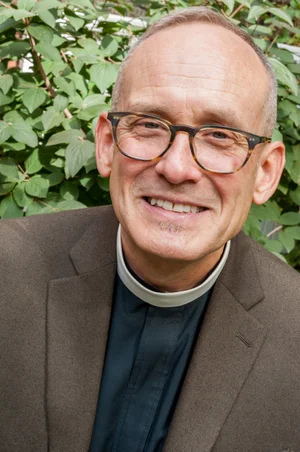
Sermon by Pr. Craig Mueller on the Third Sunday in Lent + Sunday, March 8, 2026
No water. No life. Scientists remind us that if there is life beyond Earth, it will be on planets and moons that harbor liquid water.
96% of the earth’s surface is covered by water. Roughly 60% of our bodies are water. And every drop of water in our body derives from the original drop of water on earth.
I recently read a novel by Turkish author Elif Shafaf called “There Are Rivers in the Sky.” Shafaf traces a single water droplet falling upon characters that span centuries. In the novel water is not a resource but a companion, connecting characters to an ancient story in Mesopotamia. Located in what today is Iraq and near Iran.
Mesopotamia is known as the cradle of civilization where the first cities, writing, and agriculture emerged. And now the place of war and violence. Our hearts break for the loss of life in Iran. For the civilians killed there since 2003 and in the past week. As our presiding bishop Yehiel Curry wrote in a pastoral letter, The costs in lives and safety of this [war] “will be borne by those least able to avoid it — children, families and those without the means to flee. Its deadly toll has been, and will continue to be, paid with the lives of our neighbors, including our siblings in Christ in the Middle East.”
Drops of water. Drops of tears to fill an ocean.
Throughout history, empires rise and fall, but unlike humans, water has no regard for social status or royal titles, the novel I mentioned concedes. Raindrops eventually evaporate and then wait to return to the troubled earth again. No water, no life. As the author writes in this provocative line: “water remembers. It is humans who forget.”
Water is a precious commodity in an arid climate like the Middle East. Let us trace drops of water in our texts today. The Israelites are becoming testy in the wilderness. They complain to Moses that they will die of thirst in the desert. No water, no life. God tells Moses to strike a rock so that the people may drink. Drops and drops of thirst-quenching water pours forth. Water, in the scriptures, a sign of liberation and divine power.
Now follow the drop of water to the well where Jesus meets a Samaritan woman. A holy encounter, the longest recorded conversation with Jesus. Not like the one Nicodemus had in the darkness of night. But in the bright noon sun, clearly not the time to draw water. In John’s brilliant storytelling, everything is symbolic. The well is the place where marriages are arranged. Isaac and Rebekka. Jacob and Rachel. And many more. What kind of union is going on here?
Stretch your imagination. The woman at the well is a symbol for the Samaritan people, their religion considered heretical and illegitimate. Though plenty of us have heard sermons naming this woman’s immorality, there is no mention of sin and repentance here! Delete the recurring story in your head! Replace it with a new interpretation! In the text, the woman’s many husbands represent the Samaritan people’s adulterous union with other gods. Yet Jesus’ acceptance of this woman breaks barriers. Her people are now part of the new Israel. There is free water for all. In this union, there is living water for all people. Boundaries are erased. Authentic worship is in spirit and truth.
And like good symbols, there is always more. Jesus “sees” this woman. A woman living with a man not her husband is due to economic and political systems of privilege that exclude her. Jesus sees her heart and what she has had to bear.
How appropriate for International Women’s Day. When Shafak discussed the novel I mentioned earlier, she said: “Of the most 10 water-stressed nations in the world, seven are in the Middle East and in North Africa. And this has massive consequences of course for everyone, but particularly for women, because women are water carriers. They bring water to their communities. When there’s no water, the distance that the woman has to walk to fetch water increases, unfortunately increasing the possibility of gender violence on the way or on the way back.”
We dare not forget the 75,000 people killed in the Gaza war, 60% of whom were women, children, and the elderly. Beyond comprehension. More tears. More lament.
Jesus and the unnamed woman have a conversation about water. The woman has something to offer: water from the well. Jesus has something to offer as well. Not well water that can become tainted. Living, flowing, running water.
The disciples are put off. It’s bad enough talking to a Samaritan. But a woman! Yet this woman, whom Eastern Orthodox Christians name Photine, becomes a witness. Testifies and tells her neighbors about her encounter with Jesus and the gift of living water he offers.
Now trace the drops of water to baptismal fonts. Life giving water that cleanses, heals, refreshes, renews. This gospel about living water has been used since for centuries as a formative text for those preparing for baptism. In our case, this includes Malachai who will be baptized at the Easter Vigil. Malachai will be immersed a very large font filled with drops and drops and drops of life-giving water.
Like the Samaritan woman, in baptism there is a life-changing encounter with Jesus. Barriers are broken. You are seen for who you are. And you are sent to testify to this One who knows you intimately. And who offers you the water that quenches your spiritual thirst.
No water, no life. In these troubling times come to the water. When your hearts are breaking, come to the water. When you don’t know how much more you can take, come to the water. When you long for justice and truth, come to the water. When your life is an arid desert, come to the water. When you are thirsty for something you cannot even name, come to the water. When your body and soul are tired and exhausted come to the water. When you are ready to leave your old life behind and journey toward God’s promised future, come to the water.
Come to the water. Come to this life-giving water. Come to this water that fills the oceans and fills your body. Come to this water that is Christ. Come to this water that is the Holy Spirit gushing up to abundant life. Come to this water that flows from the wounded side of Christ. Come to this water that is the very promise of your baptism.
Jesus, ever-flowing fountain, give us water from your well. Jesus, source of living water, may we drink of you and live. Amen.